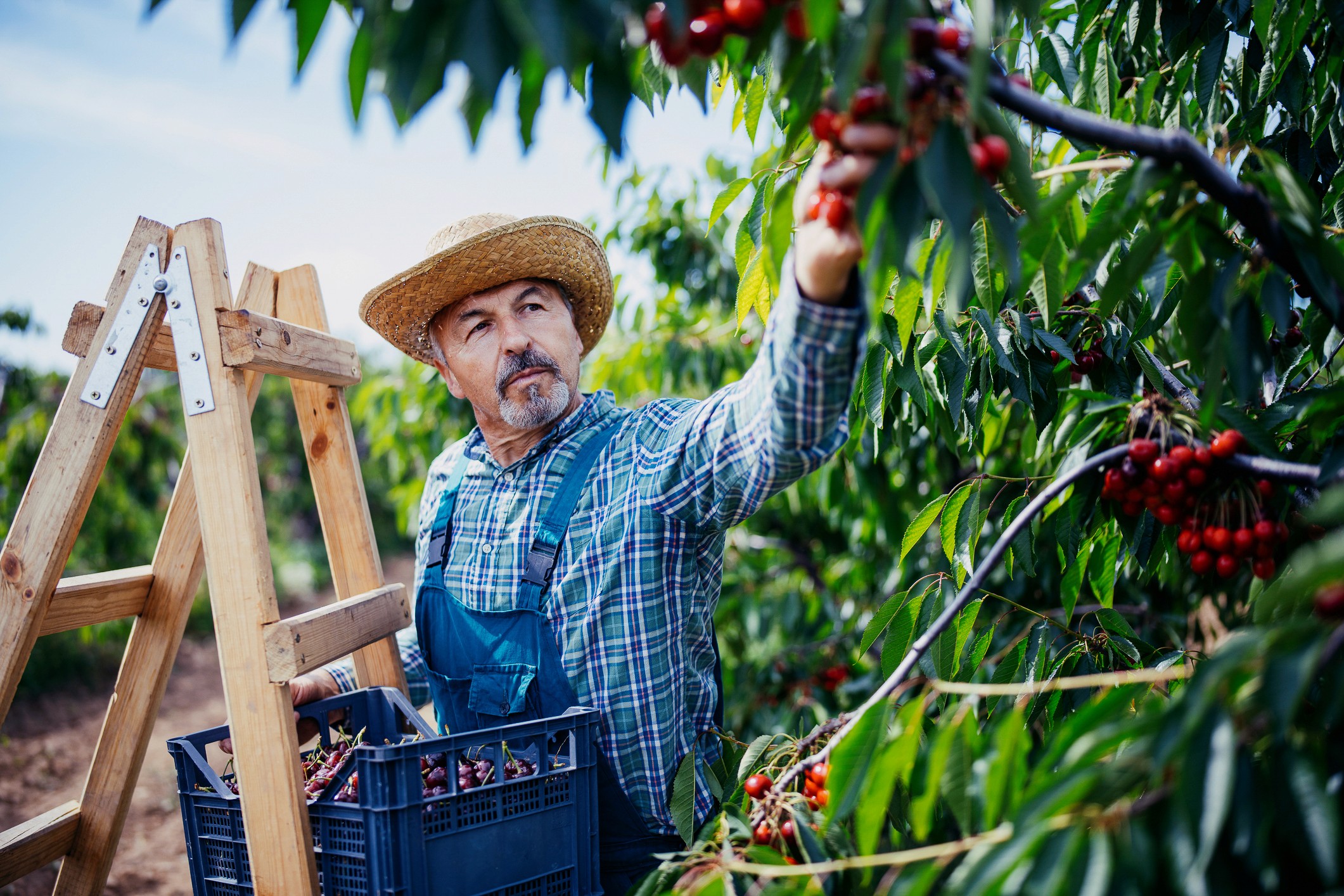

The producer can lose some of the return in a short stretch: from the time of harvest until the fruit is truly cold. This stage concentrates risks and requires method.
Post-harvest heat stress occurs when the fruit faces high temperatures, direct radiation, high DPV, and dry air before entering an effective cooling system. Damage accumulates. The fruit arrives at packing with more internal heat, and the system is stressed.
This stress is felt in cherries and table grapes, as well as blueberries and raspberries. It impacts firmness, pedicel, browning, and shelf life. The difference between a premium shipment and a downgraded one often starts with one detail: how many hours the fruit was in “hot mode.”
What post-harvest heat stress means
Harvested fruit is still alive and maintains metabolic activity. It breathes, consumes reserves, exchanges gases, loses water, and generates metabolic heat.
When the temperature rises, these processes accelerate. The tissue becomes more fragile and the likelihood of cell collapse increases. In cherries, this collapse manifests as pitting, sunken skin, less crunchy texture, and a dehydrated pedicel. Heat promotes water loss, an indicator that markets quickly penalize.
The concept is easily understood with a practical image: think of the fruit as a product leaving the field with a “fever.” The post-harvest task is to quickly reduce that fever and keep it low and stable.
The ambient thermometer helps, and the pulp dictates. A bin can be “in the shade” and still have fruit with high internal temperature. This difference explains why some batches deteriorate even if the yard looks organized.
Measure pulp in representative points of the lot, and repeat the measurement on hot wave days.
Stress is built up by the accumulation of small idle times. The total becomes costly.
Review these points:
Harvest during hours of high temperature, with fruit and foliage above critical thresholds.
Waiting in bins exposed to the sun or in yards without shade.
Transport in trucks without thermal control or with weak ventilation.
Storage in warm warehouses while completing a pallet or defining a shift.
The fruit doesn’t need a full day to deteriorate. It needs repeated heat and dry air for a few hours.
Symptoms of heat stress you can see
The fruit speaks, even when the damage starts inside.
In cherries, observe:
Loss of firmness upon arrival, feeling soft to touch and having a less firm bite.
Superficial pitting, with small depressions that grow during transit.
Brown or dehydrated pedicels, associated with water loss and accelerated aging.
Increase in rots because weakened tissue facilitates fungal advance.
These signs are amplified when there are thermal fluctuations in the chamber or container.
Pre-cooling reduces pulp temperature. That data is crucial as the pulp defines respiration, texture, color, and rate of deterioration.
A practical parameter in the cherry industry is to enter pre-cooling within the first hours after harvest. The real goal is simple: quickly reduce “field heat” to slow metabolism and water loss.
When pre-cooling is delayed, fruit uses up reserves before reaching the chamber. That loss is almost never recovered later.
An operational protocol
Define a clear flow and make it a habit. Discipline reduces variability between shifts and varieties, especially on hot wave days.
1) Harvest with thermal criteria
Schedule harvest early and late in the afternoon when the environment cools. Use shade for personnel and for collection. Move bins to protected areas immediately.
2) Reduce waiting times
Coordinate logistics for the bin to advance without long pauses. Use radios or internal messaging to avoid invisible bottlenecks. Measure real times and adjust.
3) Cool before reaching packing
In heat events, orchard cooling lowers the fruit's heat load and eases subsequent work. Tierraverde operates evaporative cooling solutions with low precipitation using emitters like Pulsator 205™ and Pulsemax 360°, which help lower microclimate temperature and increase relative humidity at critical moments. This management reduces the initial temperature with which the fruit enters the route.
4) Ensure a pre-cooling capable of keeping up
Size capacity versus peak harvest. Avoid overloading tunnels and chambers. A team pushed to the limit increases time to reach 0–2 °C and creates warm zones within the pallet.
5) Maintain a real cold chain
Control door openings and air circulation, with records in different points to detect warmer zones. Protect aisles and packaging areas because these zones often break thermal continuity.
What a cooling curve looks like
The exact curve changes depending on species, packaging, installed capacity, and cooling method. However, a guiding idea serves: the fruit should move from field temperatures to ranges close to 0–2 °C quickly and without reheating.
That “without reheating” is critical. Fruit that cools down and heats up several times loses condition faster than fruit that reduces temperature continuously.
Fruit loses water every minute. Properly managed relative humidity reduces dehydration of skin and pedicel. This control requires balance: high humidity helps, but condensation increases health risks. The packing team sets the working point with records and experience.
Stress is best managed with simple and consistent measurement.
Use:
Data loggers in bins, pallets, containers, and chambers to know the complete thermal history.
Sensors with real-time alerts in chambers, tunnels, packaging areas, and anterooms.
Pulp thermometry in representative points of the lot to validate pre-cooling.
Protocols for daily calibration and review so the data is reliable.
These records organize internal conversations and facilitate decisions with evidence.
Adjustments that help when the destination is far
Export requires days of travel. The fruit needs additional protection.
Controlled and modified atmospheres reduce respiration and slow deterioration when integrated with stable cold. Liners and materials that maintain relative humidity and reduce dehydration are also used.
The post-harvest team defines these adjustments according to variety, harvest condition, thermal history, and commercial window. The practical rule remains: the cold leads, the atmosphere complements.
Post-harvest heat stress is prevented with speed and consistency from the first hour. Each decision between the tree and the pre-cooling leaves a mark that the market detects at the destination.